How to Design a Kid's Bedroom That is Fun, Functional and Easy to Maintain

Designing a kids’ bedroom is always about finding the right balance between creativity and practicality. Parents often want a room that feels playful and inspiring for their children, while also being organised, durable and easy to maintain over time. As children grow, their needs change quickly which makes flexibility and functionality just as important as aesthetics.
For this project, the idea was to create a modern kids’ bedroom that feels warm, imaginative and calming, while still supporting everyday activities like studying, reading, playing and relaxing.
Designing Storage That Feels Light
Storage plays one of the biggest roles in keeping a kids’ room organised. Instead of relying only on bulky wardrobes and cabinets, the design combines closed storage with open niches to create a lighter and more playful visual experience.
Open shelves were designed to display books, toys and collectibles, while concealed storage helps hide everyday clutter and maintain a cleaner look. Rounded cut-outs and softer forms also make the furniture feel more child-friendly and approachable.

Using Colours That Can Grow with the Child
Rather than using very bright colours or heavily themed interiors, the room uses soft pastel shades paired with warm oak finishes to create a calmer and more timeless atmosphere.
This approach allows the space to feel playful without becoming visually overwhelming. The natural wood textures add warmth, while the pastel palette keeps the room adaptable as the child grows older.
To ensure easier maintenance for parents, durable finishes like laminates and PU coatings were used across furniture surfaces.

Creating Different Activity Zones
Today, kids’ bedrooms need to support multiple activities within the same space. Beyond sleeping, the room also becomes a place for studying, reading, creativity and downtime.
To accommodate this, the layout was divided into smaller functional zones:
a study corner,
integrated storage,
open display shelves,
and a window seating nook for reading and relaxation.
This helps the room feel more interactive while making efficient use of available space.

Adding Playfulness Through Small Details
Sometimes, the smallest details make the biggest difference in children’s spaces.
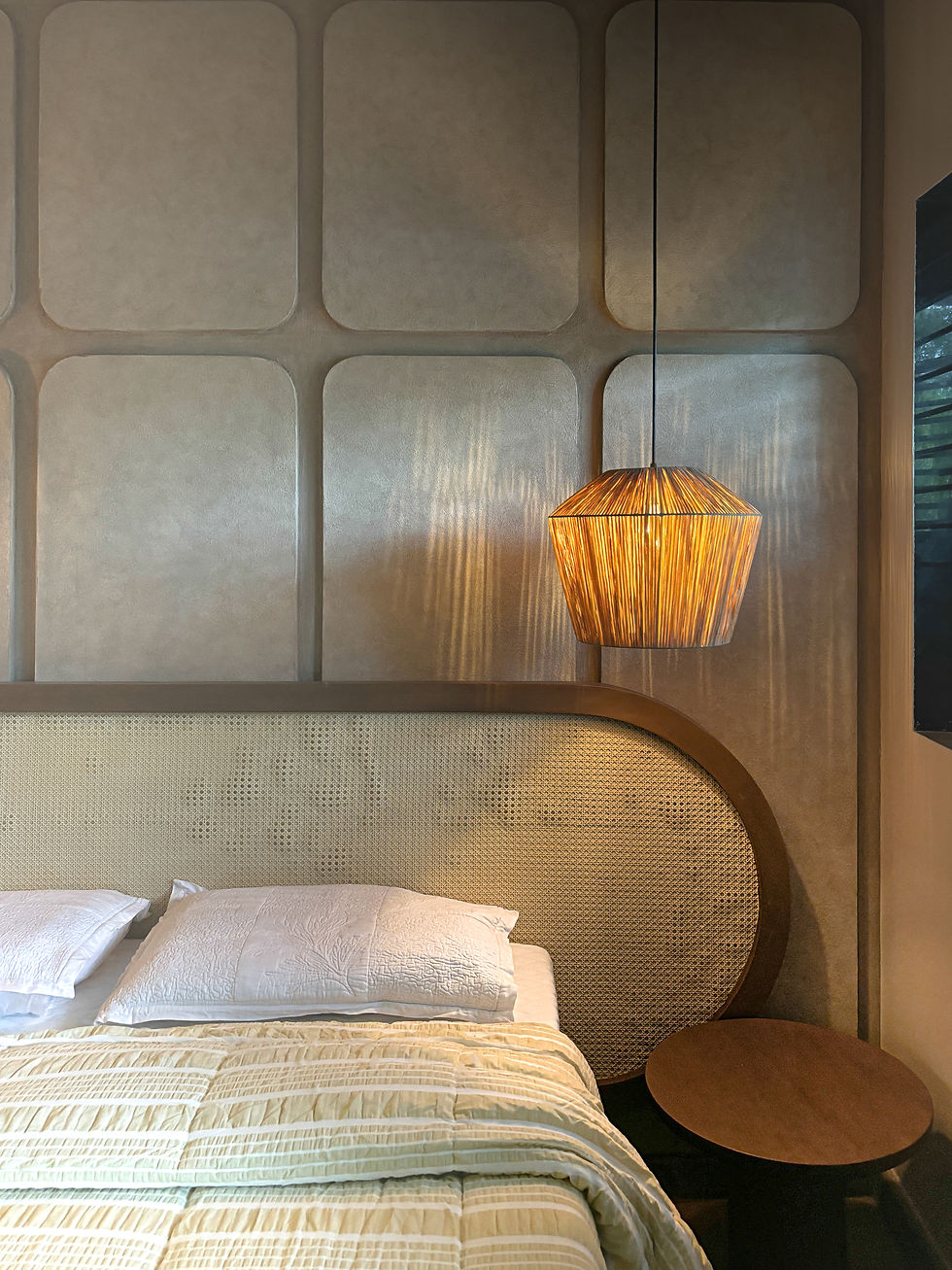
Instead of overcrowding the room with decorative elements, playful touches were introduced through curved forms, fluted details, soft lighting and fabric pendant lights. The pompom curtain detailing and rounded furniture edges help add character while still maintaining a clean and balanced aesthetic.
These subtle interventions make the room feel fun and imaginative without overwhelming the space visually.
Lighting Plays an Important Role

Lighting was carefully layered to support different moods and activities throughout the day.
General lighting keeps the room bright and functional, while suspended lights and integrated shelf lighting create a softer ambient glow during evenings. This layered approach helps the room transition comfortably between study time, playtime and relaxation.
In kids’ bedrooms especially, lighting plays an important role in creating a sense of warmth and comfort.
Balancing Creativity with Simplicity
One of the biggest challenges while designing children’s rooms is avoiding visual clutter.
Instead of using too many colours, patterns or materials, the focus here was on breathable textures and balanced compositions. Linen fabrics, natural wood finishes and softer tones help create a room that feels playful yet calming at the same time.
The result is a kids’ bedroom that encourages creativity and imagination while remaining practical, organised and easy to maintain for everyday family life.



Comments